

Blog
Advice and expertise from AM, and special guest posts by leading archivists, academics and librarians from around the world.
-
TitleDescriptionDate
-
 Pictures of Some Things You Want
Trade Catalogues and the American Home is a fascinating resource which published in early 2017 that allows you to see the changes in American consumerism over the twentieth century. The collection highlights many aspects of American daily life from around 1850-1950. One such aspect: our (and I’m lumping us Brits in with the Americans, here) great love of Stuff.
-
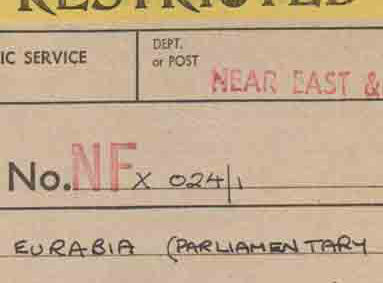 Parliamentary Association for Euro-Arab Co-operation (Eurabia)
When reviewing an historical event, I often enjoy researching the minutiae of the moment. What, I will wonder, was the weather like? What did the participants eat for breakfast? It is for this reason that I wanted to put Adam Matthew’s facsimile of the summary booklet for the 1977 ‘Peace and Palestinians’ conference into a more detailed historical and cultural context – drawn in by the little details, and encouraged by the fact that the fortieth anniversary of this significant event is rapidly approaching.
-
 Bobbies and Peelers: The Metropolitan Police Act of 1829
On this day in 1829 the first units of the London Metropolitan Police appeared on the streets of London, under Sir Robert Peel. Having become Home Secretary in 1822, Peel set to work laying the legislation in place that would enable the very first English police force.
-
 16,306 Convicts
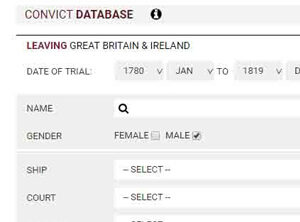
Between 1788 and 1868, the British government transported more than 160,000 convicts to Australia. A popular punishment since the early seventeenth century, transportation was second in severity only to execution. Following the War of Independence, however, the defeated Crown could no longer banish undesirable elements of society to their American colonies. Conditions in overcrowded gaols and prison hulks began to deteriorate following the outbreak of war, and continued to slide until some bright spark suggested the establishment of a penal colony far, far removed from English shores.
-
 Attacking Japanese Morale, 1940-1945
Among the gems in the Foreign Office Files for Japan are two files that consider the role of the enemy’s “civilian morale” in war and diplomacy. In both, British officials presuppose that targeting civilians might deter or defeat the Japanese war machine.
-
 Service Newspapers of World War Two: Raising morale one moustache at a time
One of the most common remarks about life as a soldier in the Second World War, from those who experienced it first-hand, is that when you weren’t scared stiff you were bored to death. For many, the episodes of fighting were interspersed with long and tedious months of waiting around for orders, or being shipped to and fro between different bases, wondering what was coming next.
-
 "Don't Mention the War": An Englishman Among Germans Aboard the Trans-Siberian Railway, 1940
In September 1940, a British diplomat named Wilfred Hansford Gallienne embarked on a two-week journey from Moscow to Tokyo via the Trans-Siberian Railway. A year into the Second World War, neither the Soviet Union nor Japan had explicitly taken sides, and Gallienne’s objective was to assess travelling conditions and evidence of military activity. His impressions are recorded in an official memorandum, included in our recently-published resource, Foreign Office Files for Japan, 1919-1952.
-
 The World Through Their Eyes: Medieval World Maps
Despite its lacklustre nickname, "The Psalter Map", which is held in the British Library and featured in AM's Medieval Travel Writing, is a rare example of c13th Century medieval cartography.
-
 Stationers’ Hall During the Blitz
The Stationers' Company Court Books are essential to understanding the history and workings of the company, but Court Minute Book k stands out for the simple reason that it contains photographs, depicting WW2 bomb damage to the Stationers' Hall.
-
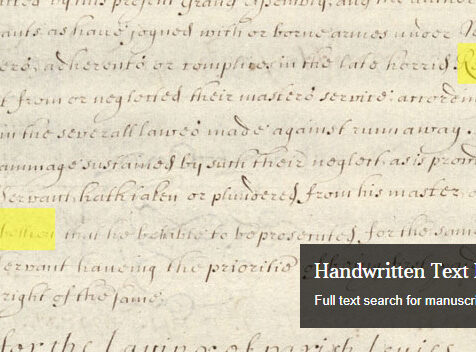 HTR: Introducing AI as an Aid to Manuscript Research in Adam Matthew Collections
Adam Matthew Digital is the first primary source publisher to utilise Artificial Intelligence to offer transformative search capabilities with Handwritten Text Recognition (HTR) technology, which we will be showcasing in the third module of our Matthew’s award-winning resource Colonial America: The American Revolution. Whilst the vast selection of material covering the American Revolutionary period in this collection was sure to pique many a budding American history enthusiast’s interest, this new HTR software has catapulted our latest collection to the forefront of academic and digital curation discussion.
-
 What links W.H. Smith, Rudyard Kipling, Edward VIII, and Harold Macmillan? A Special Guest Blog by Ian Gadd
What links W.H. Smith, Rudyard Kipling, Edward VIII, and Harold Macmillan? They were all members of the Stationers’ Company, the 600-year-old London livery company whose records are digitised in AM's resource Literary Print Culture.
-
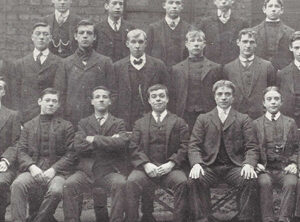 “Sedgwick Boys”: An Experiment in Colonial Labour
On 25 January 1911 a party of 50 British boys arrived in Wellington, New Zealand as part of an unusual colonial experiment. Varying in age from 16 to 20 and coming predominantly from lower class occupations such as domestic service, the lads were part of a trial scheme to ascertain the feasibility of sending city boys with no previous agricultural experience to rural farms within the British Dominions. This three-year apprenticeship scheme was the brain child of Thomas E. Sedgwick and other like-minded philanthropists, who felt increasing alarm at the enforced idleness of youth.
-
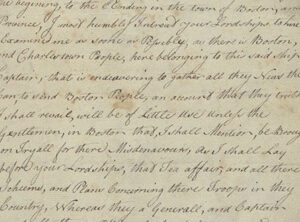 Samuel Dyer and the Boston Tea Party
The Colonial Office 5 records cast useful light on high-level administrative aspects of the American Revolution. However, not all who documented these events were as well-placed as colonial governors and secretaries. CO 5 records reveal glimpses of much more obscure figures, too.
-
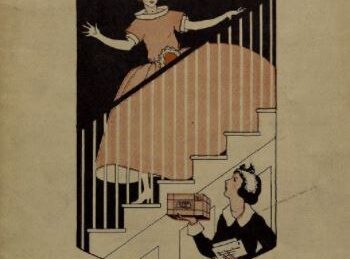 Unusual Gifts By the Hundred
If, like me, you find that celebratory occasions for family and friends tend to cluster together (birthdays, weddings, baby showers, hen parties, anniversaries), you may find yourself struggling to think of appropriate and thoughtful gifts year after year.
-
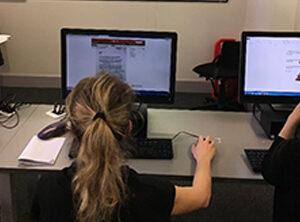 Using Mass Observation Online in the Classroom: A Case Study at Bristol University
One of best parts of my role in the Academic Outreach team here at AM is working with faculty and instructors to integrate our primary source collections into undergraduate teaching. While there is a significant user base of independent scholarly researchers, we also have many undergraduate instructors who want to build specialist primary source content into their students' learning.
-
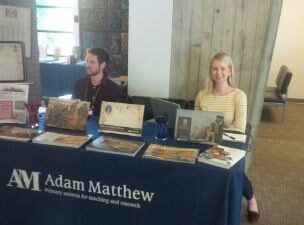 Adam Matthew presents!: Conference papers and panels
Scarcely a week goes by at the Adam Matthew office without a report landing in my inbox from colleagues returning from conferences in far-flung locations such as Utrecht, Florida and Budapest. One or other of us is forever off to an academic gathering somewhere in the world, often as an exhibitor with a booth of leaflets and goodies, and other times as an inquisitive delegate attending papers and workshops.
-
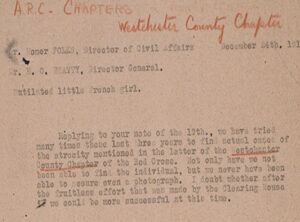 '[I]t Would Be Very Difficult to Secure Such a Child' - The American Red Cross and Wartime Propaganda
'If you can send to me a little French girl, one or both of whose hands have been cut off by the Germans, we will take care of her and her presence will do more to help us raise large sums of money than anything else.'So wrote a member of the Westchester County Chapter of the Red Cross in November 1917, five months after the United States' entry into the First World War.
-
 Back to Fortress Singapore: A First-Hand Account
Singapore was the British military stronghold in the East. However, when in 1942 the Japanese took the British by surprise, it led to one of the greatest military defeats in British history. Singapore would not be back in British hands until the war was over.
-
 The Red Star Line in Antwerp, 1873-1934
Almost two million people emigrated to the United States and Canada on Red Star Line vessels between 1873 and 1934. Good rail connections ensured that many emigrants from Switzerland and Germany booked their passage from Antwerp.
-
 Love in the time of the USSR
Today is the 50th anniversary of the release of the Beatles’ classic single All You Need Is Love. This blog, however, isn’t about the Beatles, but it is about love with a little socialist industrialism thrown in. I’ve recently been working on Module II Newsreels & Cinemagazines of Adam Matthew’s Socialism on Film: The Cold War and International Propaganda resource, and thought I’d share one of my favourite clips (so far)!
-
 Historical Memory and the Race Relations Institute
The issue of race and public memory ignites fierce debate in American cities and states on recording and representing the past, as discussed in this guest blog by Professor John Giggie.
-
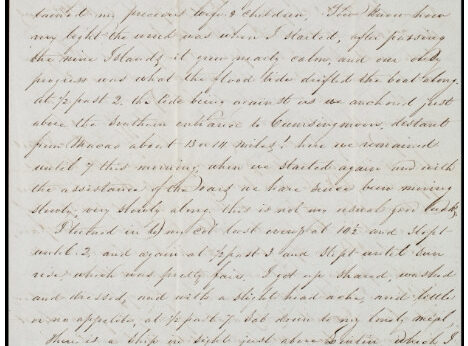 The Kinsmans: Love and Loss in Nineteenth-Century Macau
The words that Nathaniel Kinsman hastily penned to his “dearly beloved Wife” aboard a fast boat that carried him against the current of the Pei-ho River, from Macao (Macau) to Canton (Guangzhou) in China, reveal how Americans experienced China in the nineteenth century. They are emblematic of stories that reveal the human side of the Old China Trade, and lie beneath the conventional narrative that regales in opium sales and opium wars, pirates and typhoons, and, of course, tea, porcelain and silk.
-
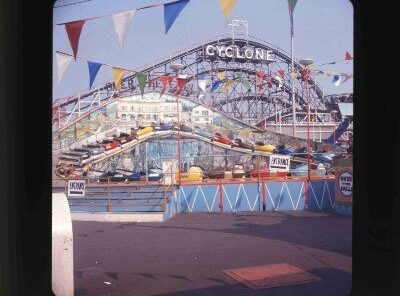 ‘Fastest, highest, longest and safest’: The Coney Island Cyclone
Ninety years ago this week, a rollercoaster called the Cyclone opened in Coney Island, on the Atlantic coast of the New York borough of Brooklyn. I am no particular rollercoaster fan – though not a tall man I’m always convinced I’ll be decapitated in the tunnels; in the merry photos taken at the end I’m the pale one hunched over – but when I found myself in Coney Island a few years ago I felt obliged, since the Cyclone is still there, to toddle along (fortified by a Nathan’s Famous Hot Dog) and have a go.
-
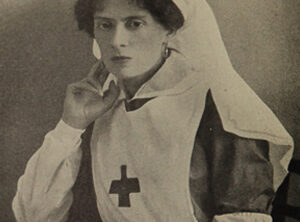 Wonder Women
Wonder Woman has kicked down doors for female superheroes everywhere this summer with her Lasso of Truth, steely commitment to peace and wholly impractical wardrobe – raking in $600 million in the process. ... While working on Adam Matthew’s upcoming resource Medical Services and Warfare, I stumbled across a biographical collection charting the real-life women who dedicated their lives to the war effort.