

Celebrating milestones and anniversaries with digital exhibits
Harris County Public Library celebrated its centenary with over two dozen digital exhibits that chart its history from the first library stations to becoming America’s tenth largest public library system. CJ Williams, Technical Services Manager, reflects on her experience of creating exhibits using AM Quartex and offers advice for establishing efficient exhibit workflows.
We needed to tell at least 26 different stories over the course of a year in a way that was fairly easy and kept everything within one website. Of all of the products we looked at, Quartex really had everything to equip us with that storytelling element, enabling us to celebrate our centennial using digital exhibits.
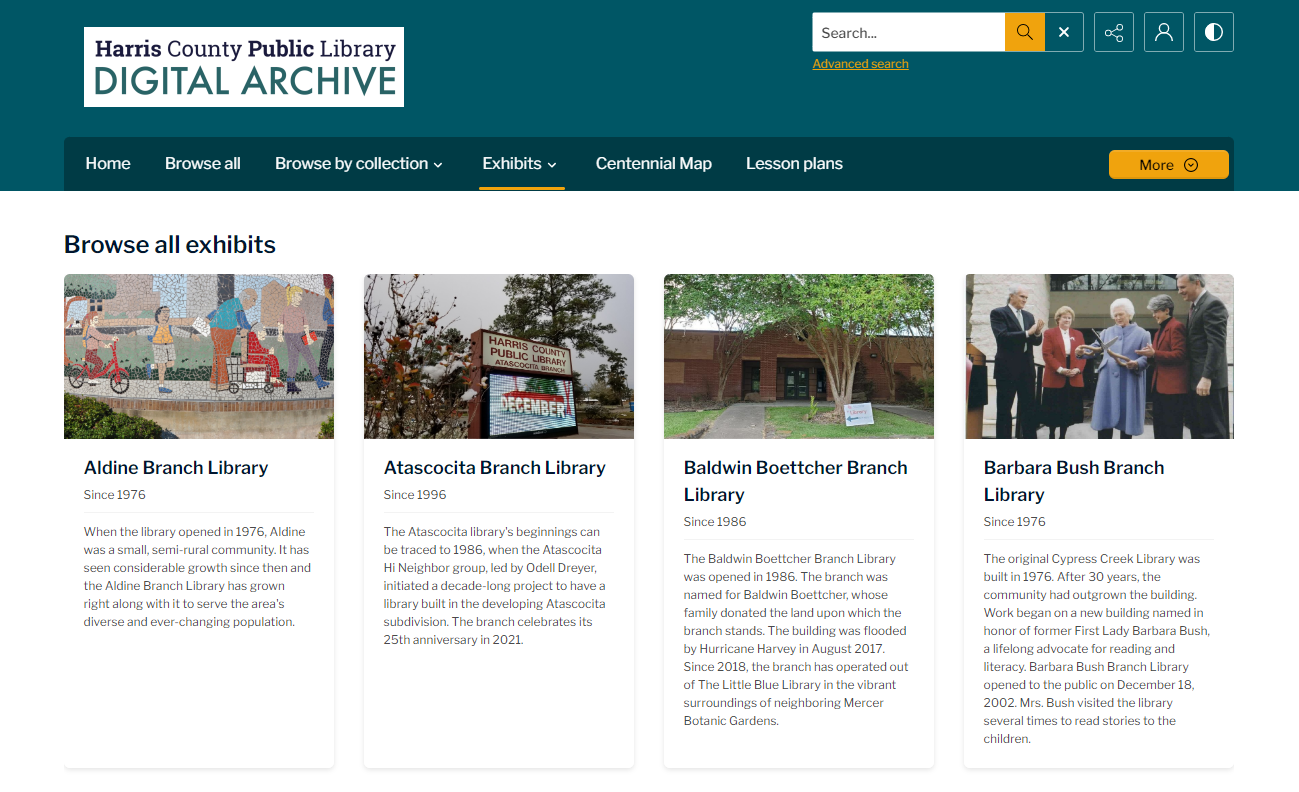
HCPL's exhibits landing page
Our exhibits are typically quite large so, factoring in everything from initial scoping and research, to drafting and revising content, related links and images, to then copying these into Quartex and publishing, we typically took 60-80 hours to create a 50-slide exhibit. A much smaller exhibit would obviously take a lot less time to plan, build and publish.
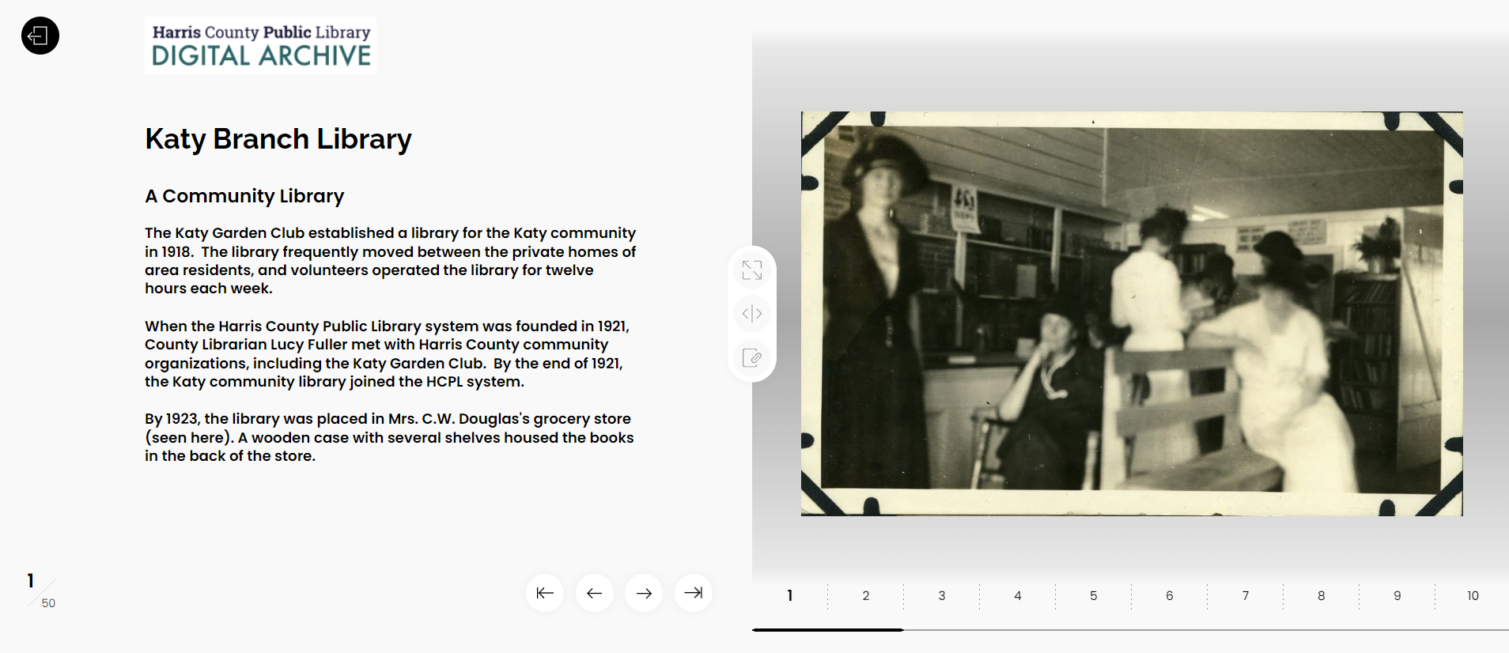
HCPL's Katy Branch Library exhibit
Exhibits are one of our most viewed features, whether it’s one of newly published exhibits or one of our earliest examples, such as “Bookmobiles”, which still prove popular despite not being actively highlighted.
We have also seen a significant increase in contributions from a wide range of sources, including the families of former library employees sharing private collections, which make a lovely, emotional addition to these exhibits.
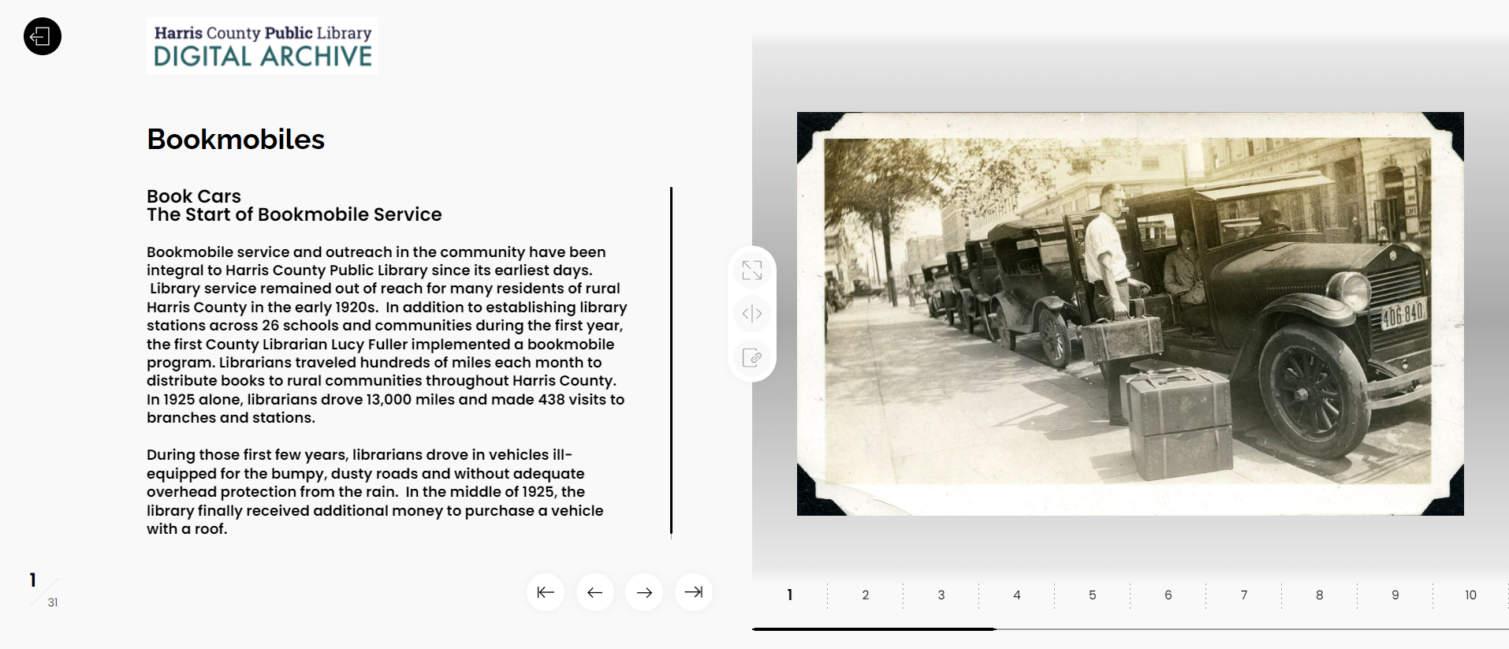
HCPL's Bookmobiles exhibit
Besides adding new exhibits, we often have the opportunity to update existing ones with newly discovered content from or about the library system.
I am also keen to explore how we can do more to make connections between exhibits and other 'contextual' elements across our site, such as our Centennial Map.
Whether revising old exhibits, or adding new ones, I consider them to be living in a sense, evolving like our history and the collections.
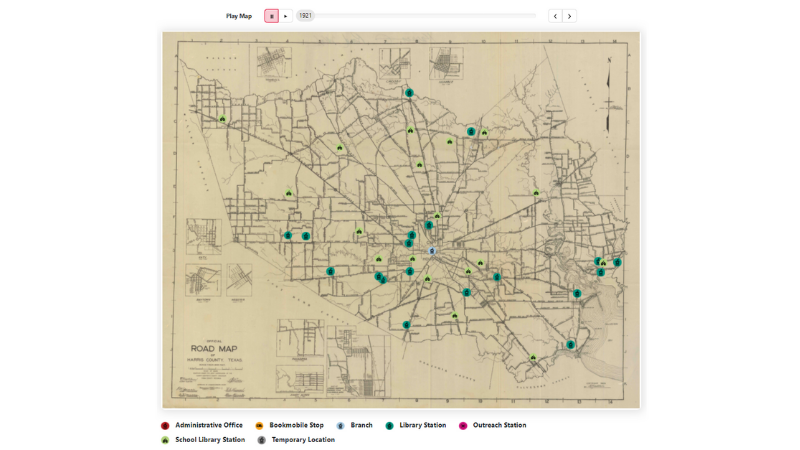
HCPL's interactive Centennial Map, developed in partnership with AM Quartex
CJ Williams's top tips for creating digital exhibits
- Draft your content before copying it into the platform: When working with lots of slides, as we were, finalising the order before copying into Quartex gives greater flexibility and makes the revision process more efficient.
- Make sure linked assets have all been ingested, catalogued and promoted first: Completing this stage before you start building your exhibit makes the process a breeze!
- Use externally created graphics to enrich your exhibits: While we present images from assets throughout each exhibit, we also use other images from our Media Library, allowing us to get really creative with different visual concepts.
- Consider navigability to your exhibits: As well as adding an Exhibits main navigation tab to our site, we link to dedicated exhibits from individual collection landing pages to allow users to learn more about each collection through the exhibit.
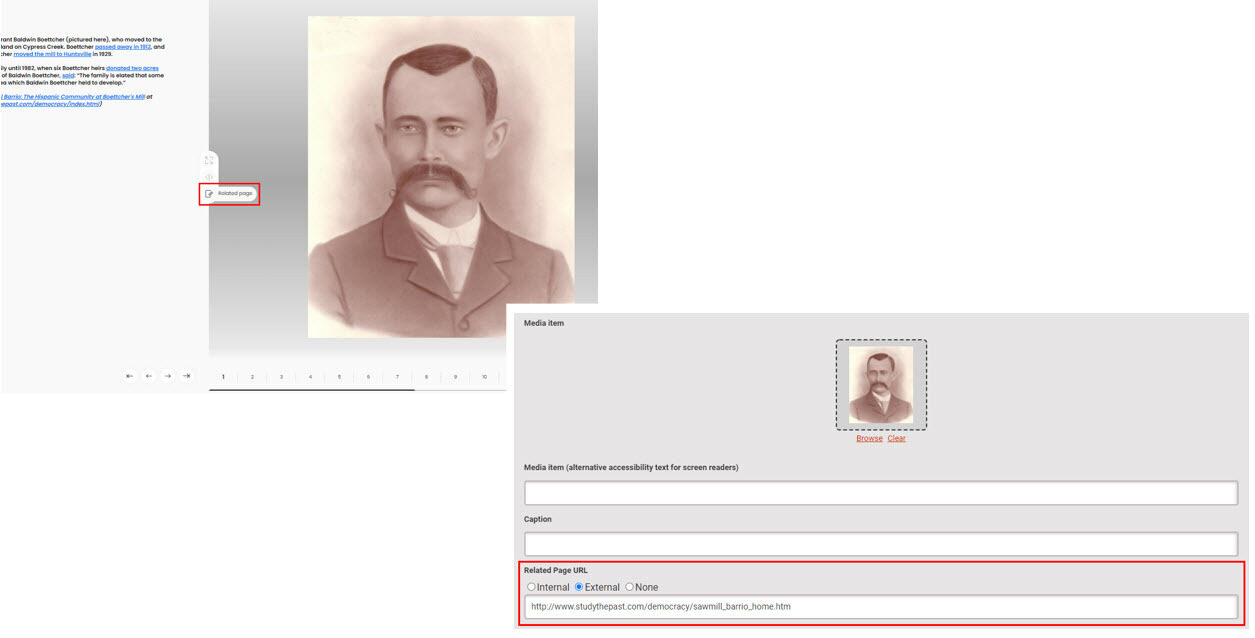
Implementing related links into an exhibit page
Further reading
Our full interview with CJ Williams can be found in the Quartex Community Platform, which you can access when you trial Quartex.
Recent posts

A snapshot of wartime Kabul, this piece highlights diplomatic intrigue, espionage, and shifting alliances in neutral Afghanistan, alongside broader themes of modernisation, geopolitical tension, and resistance movements during the Second World War.

Explore how newspapers reveal the personal alongside the political, from global events to everyday life. This blog uncovers striking public notices from Trinidad, where husbands and wives used the press to renounce responsibility for one another, offering a rare glimpse into relationships, gender roles and legal realities.