

'Freedom's Signal for the Indians'
While reading through Indigenous Newspapers in North America, AM's collection of print journalism produced by Indigenous peoples across North America, one particularly arresting image repeatedly caught my eye; an illustration of a man trapped beneath a fallen tree trunk carved with the title, “Indian Bureau”.
This striking tableau comprised the masthead of Wassaja, “Freedom’s signal for the Indians”. Later designs, such as the 1919 masthead below, would deliver an equally effective message.
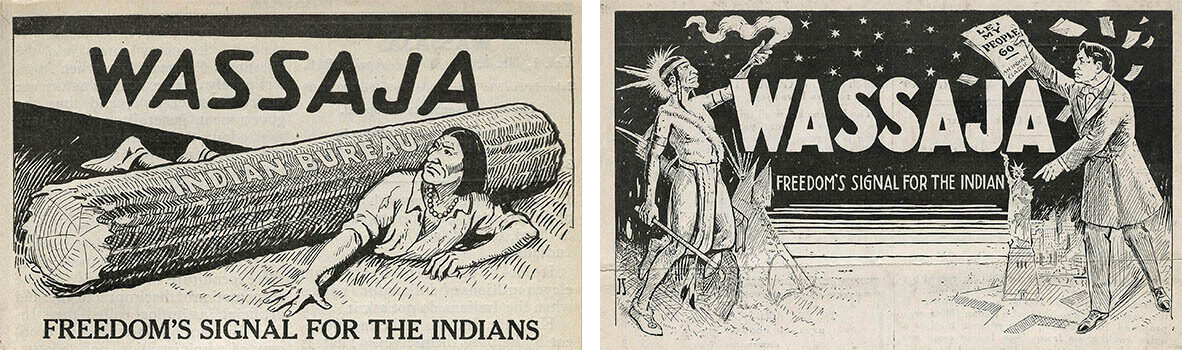
Left: Wassaja, Vol. 1, No. 2, May 1916 © The Newberry Library; Right: Wassaja, Vol. 3, No. 12, March 1919 © The Newberry Library
Published between 1916 and 1922, Wassaja would become known for its confrontational stance towards the Bureau of Indian Affairs (BIA), the federal body which oversaw the lives and lands of Indigenous peoples across the United States. Though short-lived, the title would be revived years later by the American Indian Historical Society; it was in one of these later issues that I stumbled across a biography of Yavapai-Apache doctor and activist, Carlos Montezuma – originally named Wassaja.
Born around 1866 near Four Peaks, Arizona Territory and kidnapped by raiders at the age of five, Wassaja was eventually "purchased" by an Italian photographer who became both a father figure and tutor, providing the youngster with a Westernised name and an education. Wassaja – or Montezuma as he became known – received his doctorate in medicine in 1889, becoming the first Indigenous person to receive a medical degree in the United States. Later, he would become known for his activism; appalled by federal reservations and conditions imposed by the BIA, he founded the Society of American Indians in 1911 and, later, the monthly magazine which bore his own moniker.
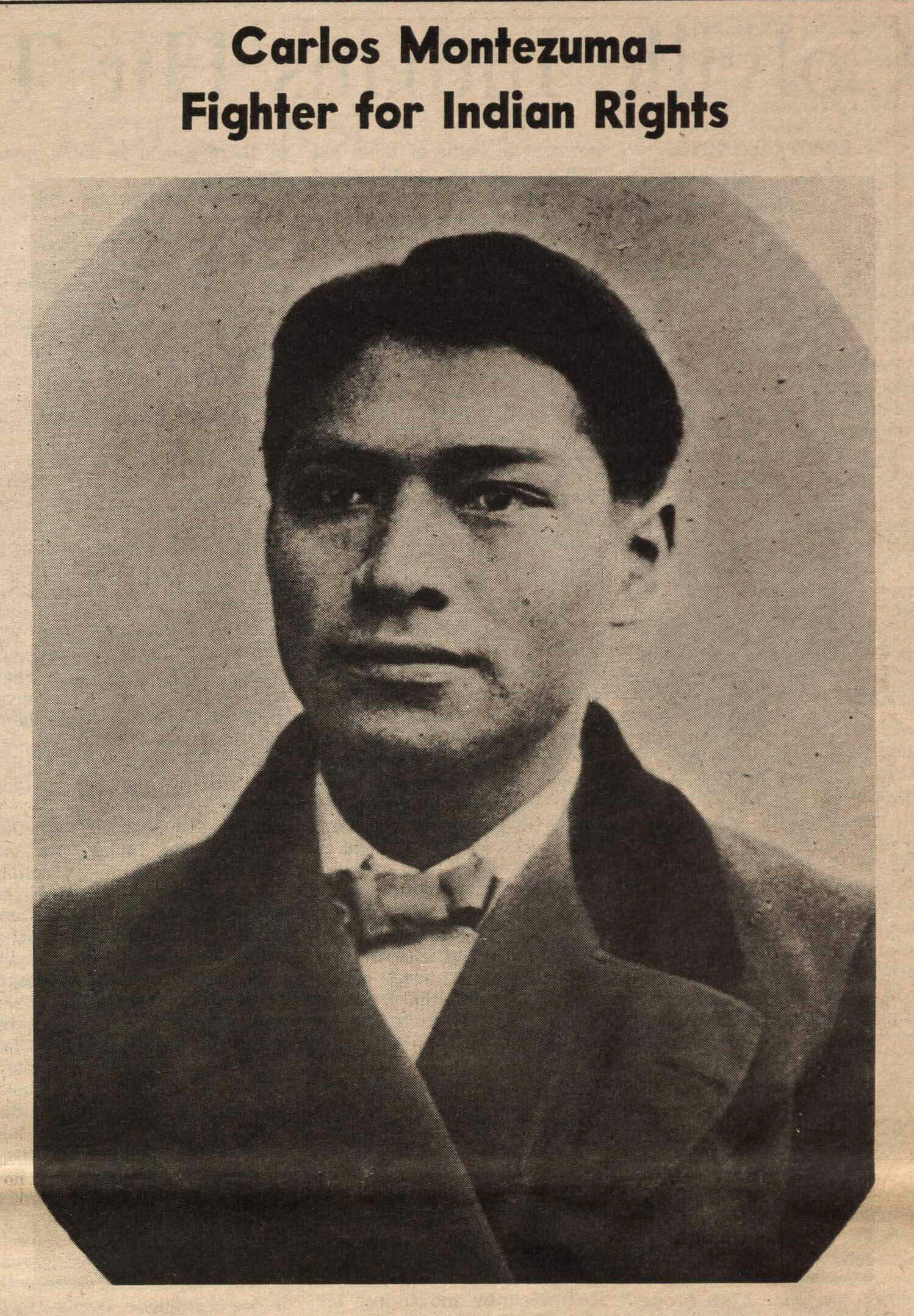
Wassaja, Vol. 1, No. 1, January 1973 © Sequoyah National Research Center, University of Arkansas, Little Rock
Wassaja – which translates to “signalling” or “beckoning” – would prove a powerful platform for Montezuma’s views on education, activism and life under federal rule. “[Wassaja’s] sole purpose," he wrote in the first issue, "is Freedom for the Indians throughout the abolishment of the Indian Bureau.” Published in October 1918, Volume 3, Issue 7 was a typical edition which included headlines about the BIA, an “Indian uprising” and the Carlisle Indian School. The revived title – published between 1973 and 1979 during the “Red Power” movement – would retread battle lines drawn by its predecessor; in January 1973, the introductory issue was emblazoned with the headline, “Indians Face Genocide. Water Rights: Number One Survival Issue.”
In amongst pieces on tobacco, education and elections, other articles in this opening issue focussed on a Seneca land dispute, violation of Bannock-Shoshone water rights and the destruction of Tribal life. The issue would also pay tribute to “Carlos Montezuma – Fighter for Indian Rights”, adding: “We dedicate Wassaja to him. May his spirit live in all of us.”
Like many children growing up in the UK, my first exposure to the myriad Indigenous cultures of North America came not through first-hand accounts or historical sources, but through the hackneyed tropes of Hollywood’s bygone "golden era". Working in Indigenous Newspapers in North America was an eye-opening experience; divorced from those stereotypical narratives and the pages of the mainstream media, this unique collection of periodicals offers an alternative perspective on historical and political events. Tribal newspapers such as Wassaja gave Indigenous people across the United States a voice, and continue to do so today, ensuring that the spirits of early activists such as Wassaja himself live on.
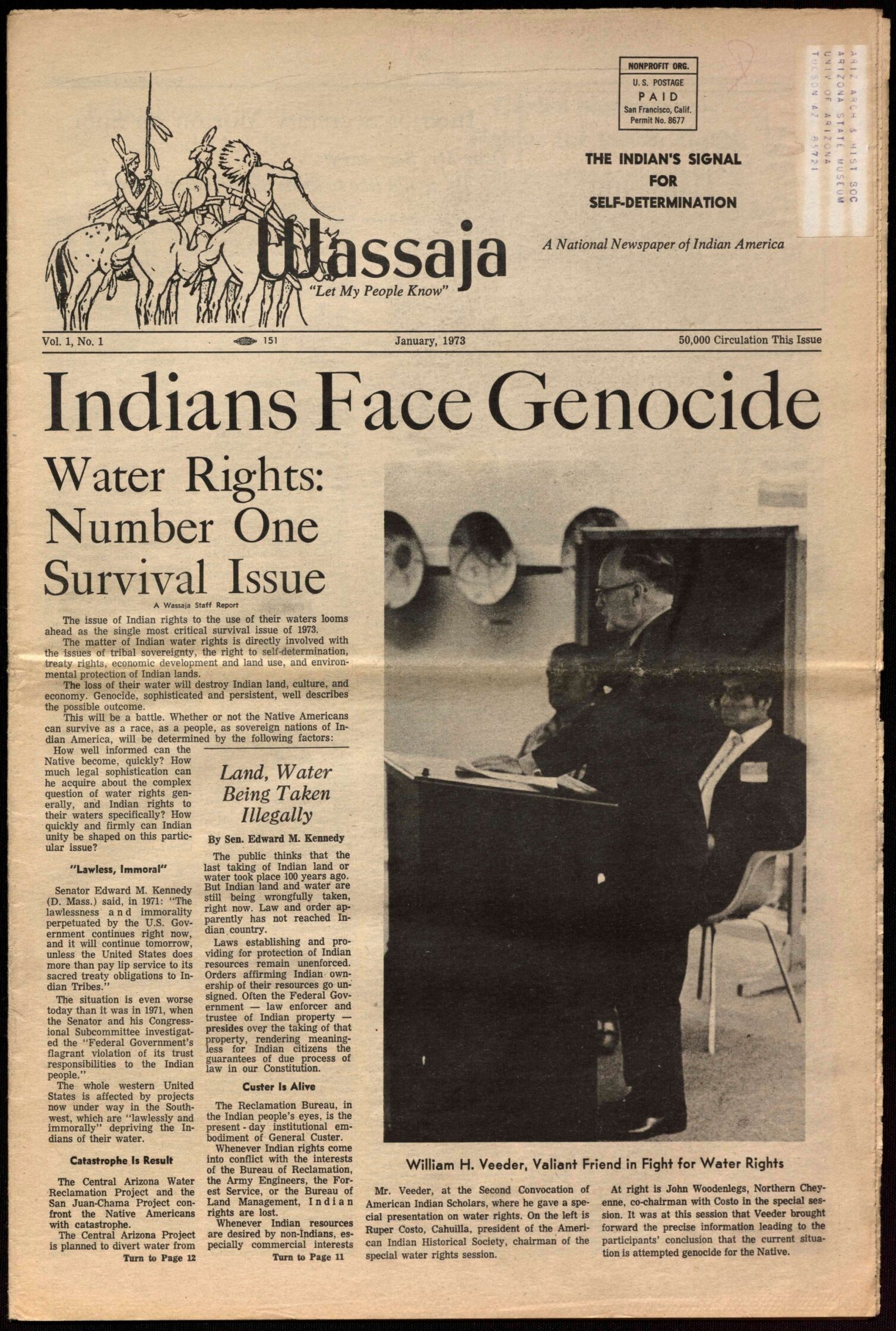
Wassaja, Vol. 1, No. 1, January 1973 © Sequoyah National Research Center, University of Arkansas, Little Rock.
For more information about Indigenous Newspapers in North America, including pricing, please request a demo.
Recent posts

Explore how newspapers reveal the personal alongside the political, from global events to everyday life. This blog uncovers striking public notices from Trinidad, where husbands and wives used the press to renounce responsibility for one another, offering a rare glimpse into relationships, gender roles and legal realities.

Noor Inayat Khan's story, revealed through wartime intelligence records, uncovers the realities of espionage and the extraordinary courage of a woman whose legacy challenges how we remember the Second World War.