

International Women's Day: Celebrating women
International Women's Day is celebrated around the world, recognising women's achievements and promoting gender equality. It has working class beginnings, emerging from the strike of 1908 in New York, where 15,000 garment workers marched to demand workers rights and to protest their difficult working conditions. The name and date for International Women's Day has evolved over the years, beginning as 'National Woman's Day' in the US on 28 February, 1909.
Documents published in the 1970s and included in Gender: Identity and Social Change highlight various events held to celebrate International Women's Day. Programmes include guest speakers, films and workshops which focus on self-help, identity and fair working conditions for all. A women's dance offers childcare, a common factor across many International Women's Day events, allowing greater accessibility to support networks, organisations and social events. The dance also promises a 'new women's band' as entertainment for the evening.
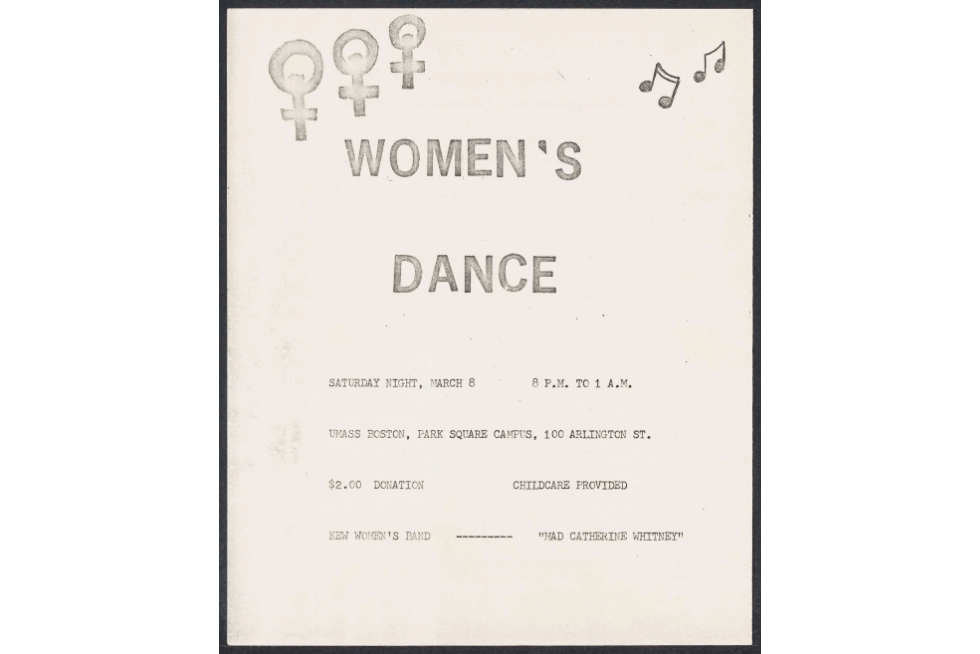
International Women's Day marches: flyers, clipping, press release, newsletter © Schlesinger Library on the History of Women in America. Rochelle Goldberg Ruthchild.
The document also explored women's voices at this time, with poetry, essays and experiences shared. They offer a more intimate look at the lives of ordinary women, exploring their successes and offering them a platform to express their views openly.
This next document is based on a speech given by Mary Lou Ginberg at the International Women’s Day Celebration in San Francisco in 1970. The powerful speech explored the need for socialist movements as the key to liberation. Ginberg states that:
More and more people are realising that individual solutions are available only to the rich… only socialism, where the working people own the industries and run the government for the benefit of all of us, can offer liberation for women as well as men.
She says that a world where women are treated as equals can mean better relationships between men and women, and that ‘in defeating our enemy, we, as women will find our real liberation’.
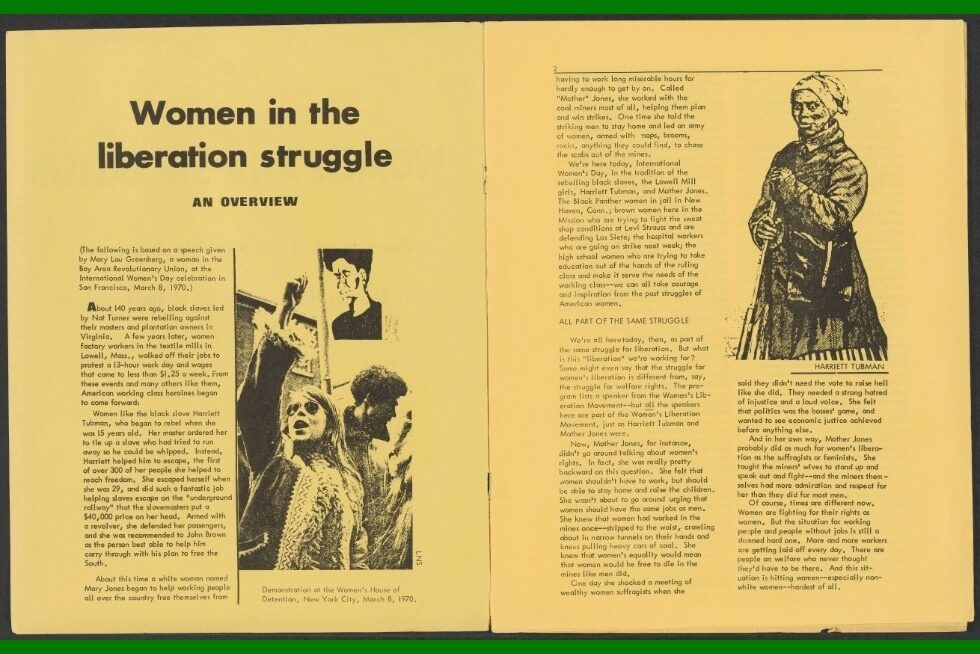
The relationship between feminism and socialism © Schlesinger Library on the History of Women in America.
The potential for gender equality to benefit everyone is explored in this board game style cartoon clip from 1979. The cartoon examines different sexist scenarios for men and women, and the more casual everyday sexism seen at this time. The contradictions in these sketches show how everyone is held back by gender inequality and stereotyping, highlighting how to recognise and fight it in order to move towards true gender equality for all.
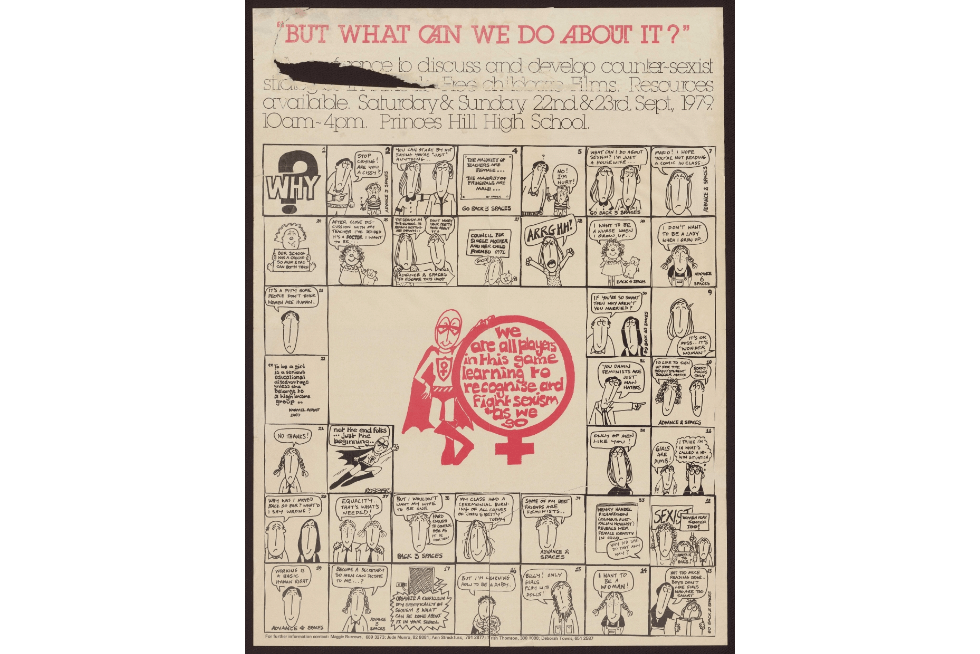
But what can we do about it? © The University of Melbourne.
For more information on Gender: Identity and Social Change, including free trial access and price enquiries, please email us at info@amdigital.co.uk.
Recent posts

A snapshot of wartime Kabul, this piece highlights diplomatic intrigue, espionage, and shifting alliances in neutral Afghanistan, alongside broader themes of modernisation, geopolitical tension, and resistance movements during the Second World War.

Explore how newspapers reveal the personal alongside the political, from global events to everyday life. This blog uncovers striking public notices from Trinidad, where husbands and wives used the press to renounce responsibility for one another, offering a rare glimpse into relationships, gender roles and legal realities.