

Commodities of the China trade: Bechè de mer, shark fins and gold
During the eighteenth century, American merchants sought to establish trade with China. Their ships set sail from New York, Boston, Salem and Philadelphia laden with tea, ginseng and opium; all profitable and powerful commodities that could be traded with the accomplished merchants waiting at Canton. However competition from establishments such as the East India Company kept the American merchants busy; they had to find products which satisfied the niche and sometimes peculiar tastes of the merchants at Canton.
China, America and the Pacific: Trade and Cultural Exchange contains a business record item which details specific goods that were to be packed for the China trade between 1828-1829. The record contains a fascinating list of products including the following: bechè de mer, shark fins, tortoise shells, pearl shells, opium and gold amongst others. Trading goods such as shark fins is quite horrifying by today's standards, but this document is rich in its explanation of the quality of such products and the price they fetched.
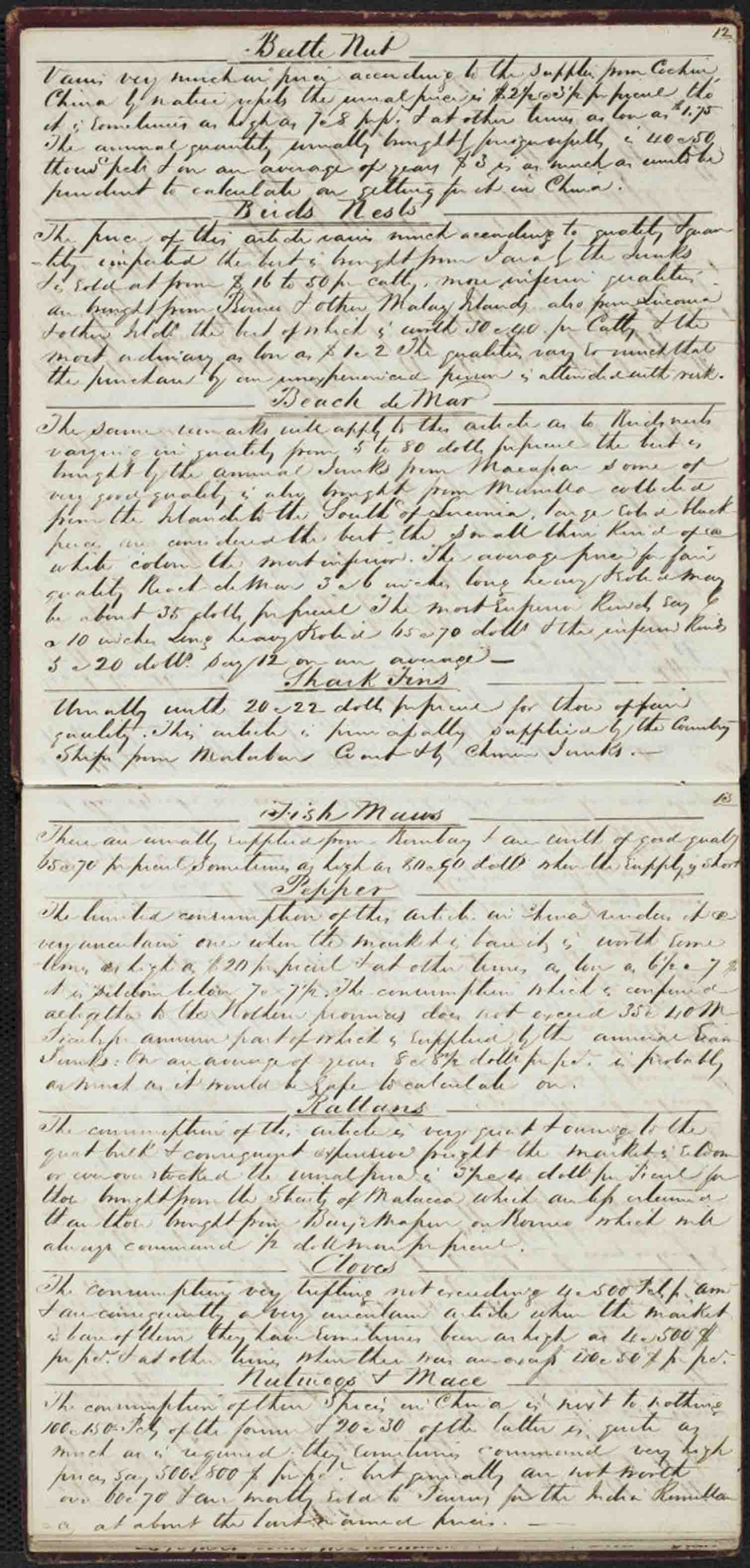
Image © Massachusetts Historical Society. Further reproduction prohibited without permission
One product included is bechè de mer, pictured in the above image. Found in the Pacific islands bechè de mer is a Chinese delicacy which was added to soup. Translated bechè de mer means sea slug! Traders collected the niche commodity, often found in birds’ nests, or relied on the experience of indigenous peoples to collect the product for them for a small fee. Such specialised products were never going to put the East India Company out of business or create fame and fortune for the merchants who traded them. They do however offer a fascinating glance into the demands of the market at the time.
For more information about China, America and the Pacific: Trade and Cultural Exchange, including pricing, please request a demo.
Recent posts

Explore how newspapers reveal the personal alongside the political, from global events to everyday life. This blog uncovers striking public notices from Trinidad, where husbands and wives used the press to renounce responsibility for one another, offering a rare glimpse into relationships, gender roles and legal realities.

Noor Inayat Khan's story, revealed through wartime intelligence records, uncovers the realities of espionage and the extraordinary courage of a woman whose legacy challenges how we remember the Second World War.