

Christmas at sea: Grog, ghosts and good old carols
Christmas, a time for mistletoe and wine according to Sir Cliff, but what was Christmastime like for those at sea in the nineteenth and early twentieth centuries?
Away from loved ones (and good food, as a number of our Life at Sea diarists often note), Christmas could be a gruelling time of year for those at sea. Whilst for some it was an opportunity to rejoice and think fondly of those at home, for others it was disheartening to remember the distance between them. In some cases, Christmas would be no different from any other day.
Lieutenant Reginald Baldwin documents his Christmas at sea whilst on the Nares expedition to the North Pole in 1875. He clips into his journal the Christmas Day menu and a few Christmas cards. The day begins at 3:45am, with all hands on deck for breakfast. Baldwin is presented with a box of cigars by the Captain and the crew attend a church service. The day continues with singing from the crew, including the national anthem, a few games played of pool and a glass raised to absent friends. A jolly, reverent and calm day is spent by the officers, but there were stark differences between these experiences and those of the lower-deck seamen.
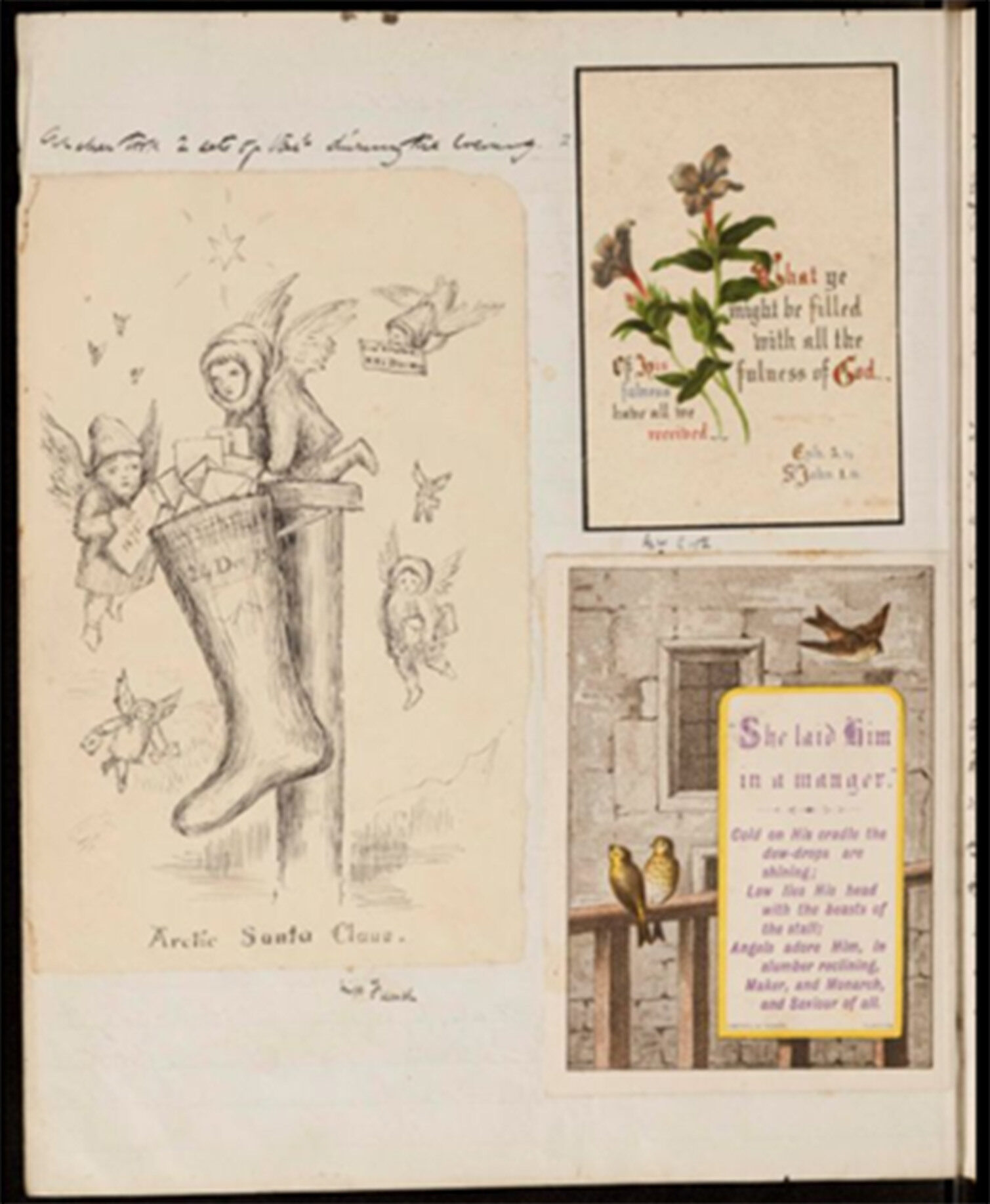
Christmas Cards, 1875. Journal kept by Lieutenant Reginald Baldwin Fulford, HMS DISCOVERY, on the Nares Expedition - Life at Sea
Magazines like the Sierra Cordova Magpie, written aboard the mercantile marine ship Sierra Cordova, provide insight into the joy and chaos of the festive season at sea across the ship’s crew in 1901. The most important and favoured duty of the crew was “splicing the brace” on Christmas Eve, which began at 4 bells (6 o’ clock) once the usual daily duties were done. “Splicing the brace” is kindly explained by the author to us “non-nautical” folk, as the serving of a tot of grog (alcohol) to each man. And so the celebration devolves from there. The author fears he is being visited by a “Christmas ghost” upon hearing the “howls and moans and dismal screech[e]s” of the cadets, also known as carol singing, which the Captain is set to endure. Later, our author treats us to a well-known Christmas visitor behaving in an odd manner:
“astonished to find myself face to face with Santa Claus, who was busy with palm and needle sewing up the legs of trousers, into which he [was] emptying a most miscellaneous pile of rubbish, old shackles, rusty bolts and nails”
Likely a prank pulled by one of the crew dressed as Santa Claus, our author quickly rushes to hide his clothes so he does not suffer the same fate. The festivities are brought to a close on Christmas Day with a game of cricket and an evening singing carols: “a pleasant finish to a pleasant Xmas at sea”.
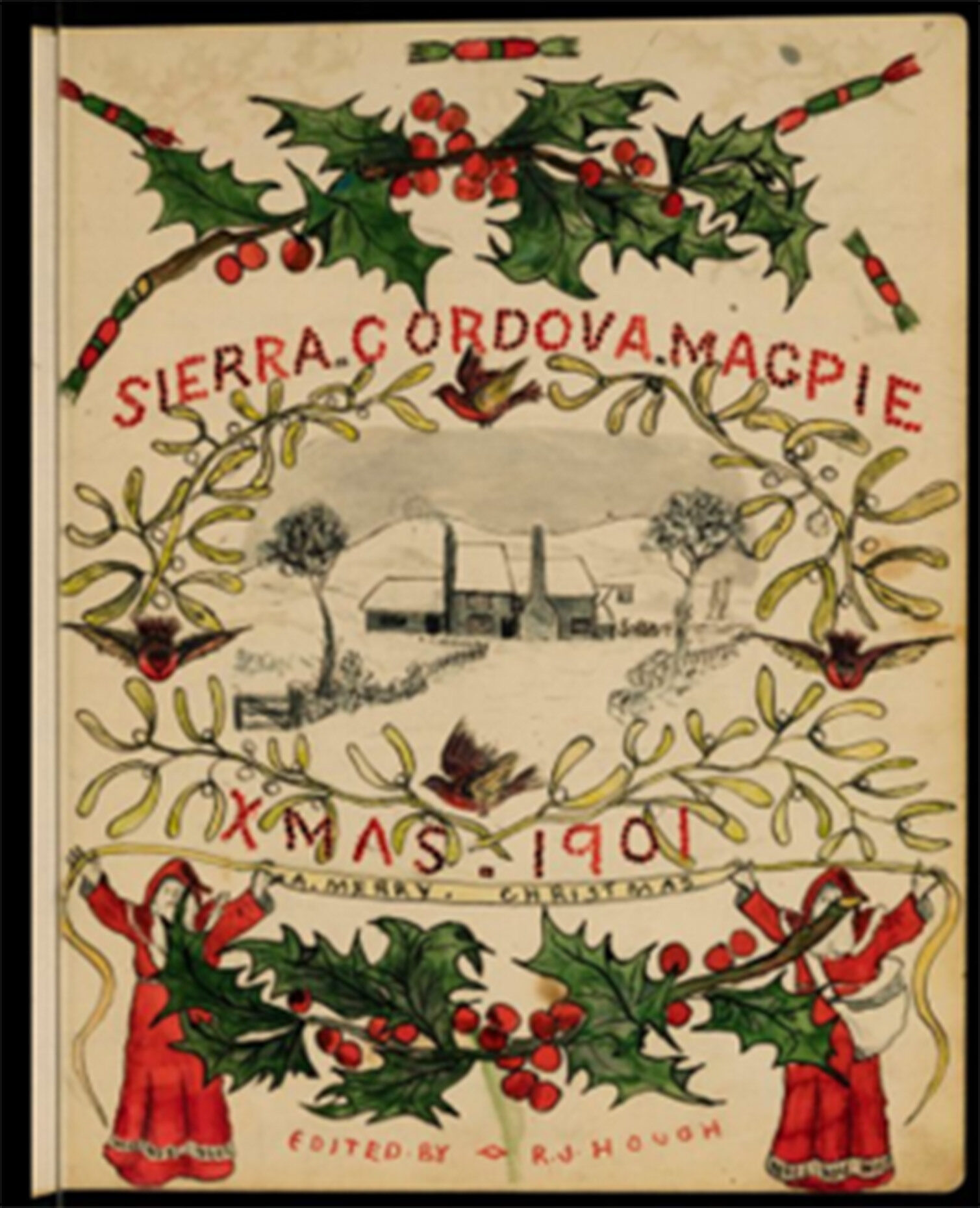
Sierra Cordova Magpie Xmas 1901. Volume of Sierra Cordova Magpie and 'Life in the Mercantile Marine' Cartoons - Life at Sea
These examples of Christmas at sea provide fantastic insight into the relationships of crew members, their leisure activities and general morale aboard the ship.
For more information about Life at Sea: Seafaring in the Anglo-American Maritime World, 1600-1900, including pricing, please request a demo.
Recent posts

A snapshot of wartime Kabul, this piece highlights diplomatic intrigue, espionage, and shifting alliances in neutral Afghanistan, alongside broader themes of modernisation, geopolitical tension, and resistance movements during the Second World War.

Explore how newspapers reveal the personal alongside the political, from global events to everyday life. This blog uncovers striking public notices from Trinidad, where husbands and wives used the press to renounce responsibility for one another, offering a rare glimpse into relationships, gender roles and legal realities.